
Moscow directed by SEONHWI KIM.
27 January 2026
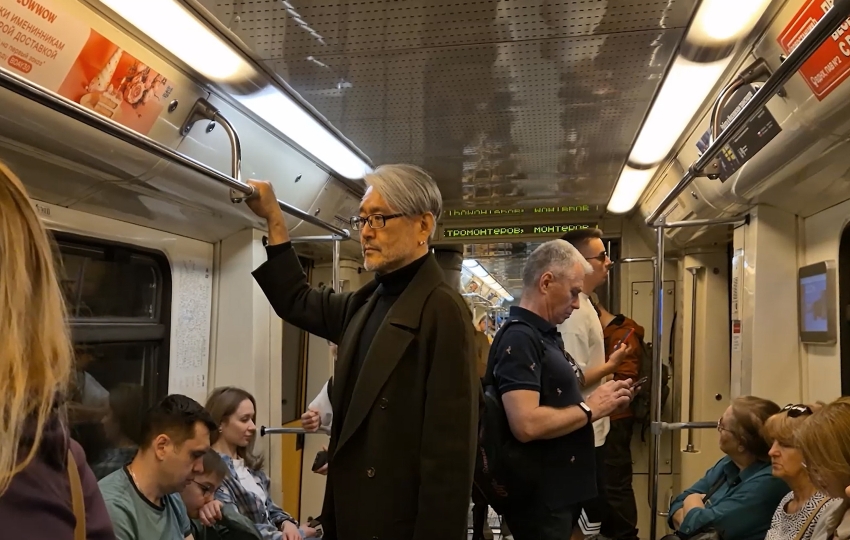
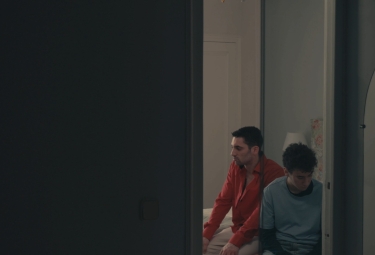
Moscow is a story about human beings struggling at the boundary between presence and absence—about things that exist and yet do not, drifting through time and space. It is an independent art film that explores love and loss, and the questions and conversations that continue to speak within us even after love has ended. Written, directed, shot, and edited entirely by South Korean filmmaker Seonhwi Kim, the film offers a dense cinematic experience born from deep personal immersion and deliberate choices, even under extreme production conditions.
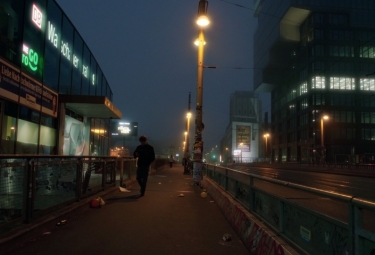
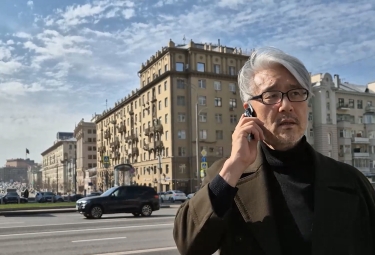
The idea for Moscow began when Kim’s previous work was officially invited to the 47th Moscow International Film Festival in 2025. For the director, Moscow was an unfamiliar city he had never visited before—a place where beauty and history coexist with ongoing conflict. A woman crying alone in a white dress on Red Square, a man arriving in Moscow to write a novel, a fatal love that begins by chance, and a sudden separation all merge with the city’s atmosphere to form a mysterious and haunting narrative.
Moscow was filmed entirely on location after the director’s attendance at the Moscow International Film Festival. With no crew or professional equipment, the entire film was shot handheld on a smartphone. Through questions and answers exchanged via mobile phones, the characters’ philosophical conversations and emotional depth are conveyed, intensifying the film’s immersion. By minimizing explanation, the film invites audiences to follow the characters’ inner worlds and dialogues, projecting their own memories and emotions onto the story. The visual limitations ultimately become a device that deepens emotional density.
Moscow is Seonhwi Kim’s first feature film as a director and his fourth completed screenplay. Choosing sincerity and perseverance over technical perfection, the film trusts in the power of cinematic storytelling. It offers quiet yet profound resonance and questions to those who have experienced love, loss, and the pain of creation—while also standing as a response to emerging filmmakers who remain devoted to their own narratives and determined to see them through to the end.
.jpg)
.jpg)
.jpg)